Most hotel owners do not wake up one day and suddenly decide to sell. More often, the process begins quietly—long before financial pressure becomes visible to guests, staff, lenders, or the market. Increasingly, some owners are choosing private conversations earlier, while more options still exist.
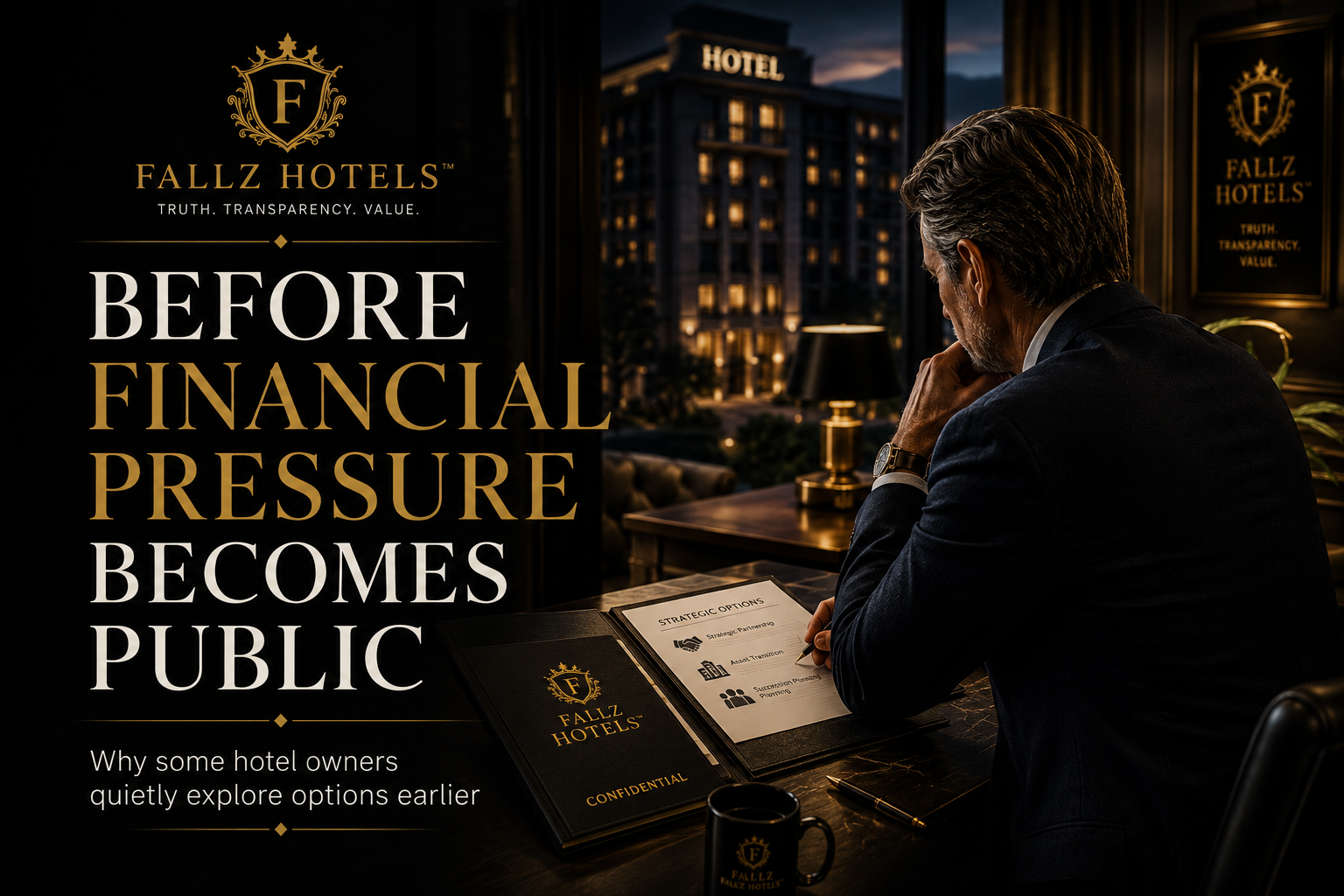
Most hotel owners do not suddenly decide to sell.
Rarely does it happen overnight.
Hospitality is personal.
Hotels represent:
Years of work.
Relationships.
Risk.
Sacrifice.
Pride.
Legacy.
For many owners—
the hotel is not just an asset.
Which is why most difficult decisions begin quietly.
Long before anyone else notices.
Long before headlines.
Long before public signals.
Long before guests or staff sense anything changed.
And increasingly—
some experienced hotel owners are beginning to understand something important:
That distinction matters.
Especially in hospitality.
This part matters.
Because pressure in hospitality usually builds gradually.
Operating costs rise.
Insurance increases.
Taxes increase.
Labour becomes harder.
Debt becomes more expensive.
Capital requirements grow.
Margins tighten.
Sometimes—
nothing dramatic happens.
Just:
Quietly.
Consistently.
And eventually—
some owners begin asking themselves:
That is not weakness.
That is stewardship.
Many operators naturally delay difficult decisions.
Understandably.
Hope the market improves.
Hope costs normalize.
Hope performance strengthens.
Hope refinancing becomes easier.
Sometimes—
those hopes prove right.
But experienced owners increasingly understand something important:
Because once pressure becomes public—
options often become narrower.
That reality deserves acknowledgment.
Hospitality is relationship-driven.
Reputation matters.
Perception matters.
Confidence matters.
And public pressure can create consequences:
Staff uncertainty.
Guest concern.
Lender scrutiny.
Negotiating weakness.
Market speculation.
Reduced flexibility.
That does not mean outcomes become impossible.
But increasingly—
some owners quietly realize:
That mindset matters.
This is where thoughtful operators increasingly think differently.
Private conversations.
Strategic timing.
Quiet market feedback.
Relationship-based discussions.
Partnership exploration.
Succession planning.
Selective buyer conversations.
Confidential repositioning.
Not because decisions are final.
Because understanding options creates strength.
Especially while leverage still exists.
That distinction matters.
A lot.
One reason many hospitality owners prefer private conversations?
Control.
Control of timing.
Control of messaging.
Control of relationships.
Control of staff confidence.
Control of guest perception.
Control of reputation.
Hospitality rarely benefits from unnecessary noise.
And thoughtful owners increasingly understand:
That deserves attention.
Increasingly—
experienced operators ask:
These are not panic questions.
And strong operators ask them early.
Owner:
“We are not desperate.”
(Pause)
Advisor:
“I know.”
(Long pause)
Advisor:
“…that is exactly why this is the right time to explore options.”
That distinction—
quietly—
changes outcomes.
Great hotel decisions rarely happen under pressure.
They happen:
Earlier.
Calmer.
More strategically.
Because eventually—
experienced hotel owners understand something important:

Many hotel owners begin thinking about the next chapter years before they ever make a decision.
Sometimes the first step is simply understanding what options may exist — quietly and without pressure.
Private hotel conversations.
Before anything becomes public.
Oakville, Ontario, Canada
Private conversations. No public listings.
Your information is handled with care — always.