Hotels talk about culture constantly. Mission statements. Posters. Training sessions. Leadership speeches. But real hotel culture is rarely built in meetings. It is quietly shaped during ordinary shifts, through small leadership moments most people never notice.
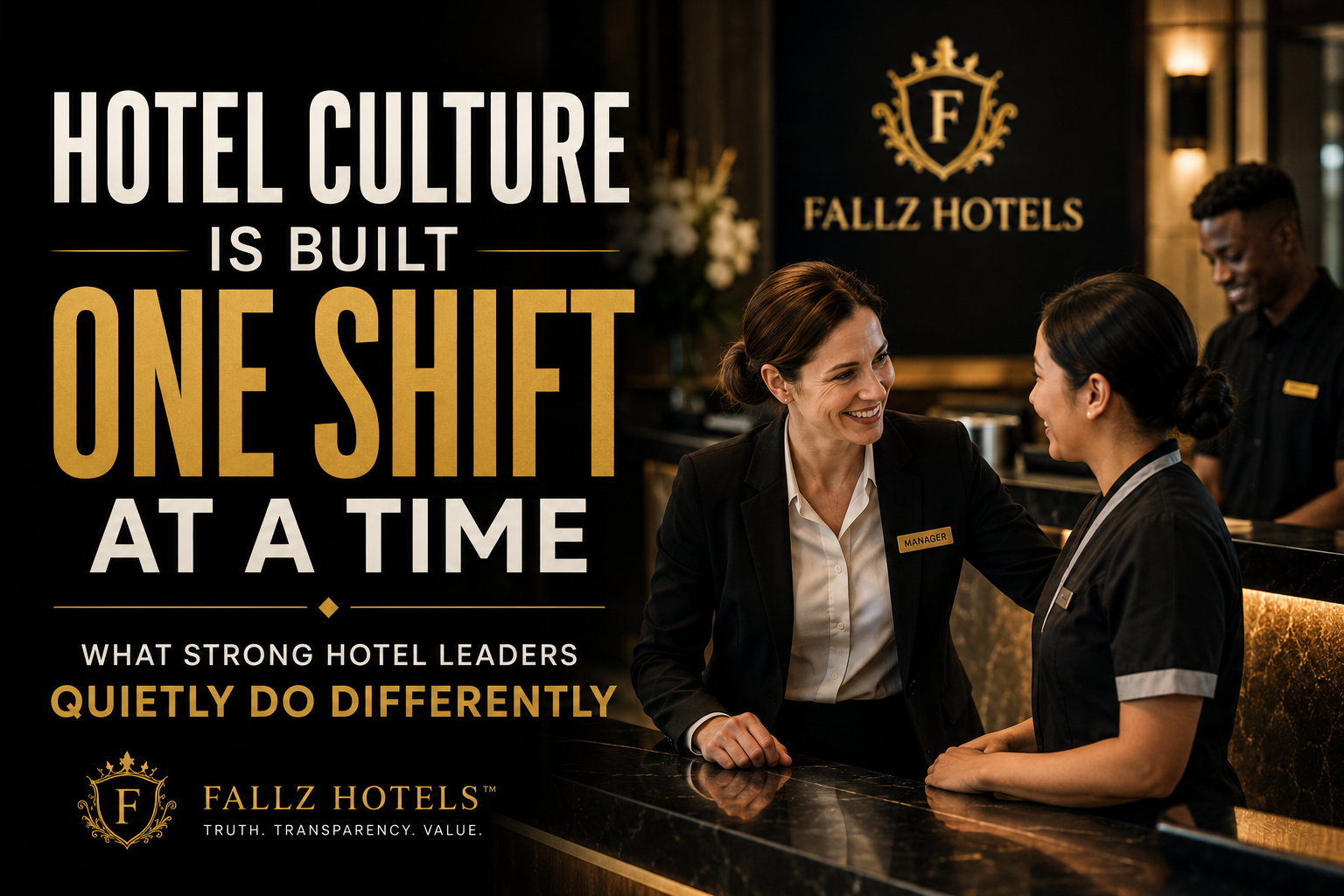
Hotels love talking about culture.
Mission statements.
Core values.
Corporate messaging.
Leadership speeches.
Staff room posters.
Workshops about teamwork.
But ask most hospitality professionals where culture is actually built—
and the answer feels very different.
Because real hotel culture is rarely built in meetings.
It is built:
During stressful shifts.
During guest problems.
During short-staffed mornings.
During difficult conversations.
During ordinary moments most people forget—
but staff remember.
And increasingly—
strong operators are beginning to understand something important:
And whether it grows—
or weakens—
often depends on frontline leadership.
Here is the uncomfortable truth:
If you do not understand what your team experienced during today’s shift—
you probably do not fully understand your culture.
Culture is not what leadership says.
Culture is what people experience.
Quietly.
Daily.
Questions strong leaders increasingly ask themselves:
That is culture.
And most of it happens quietly.
Strong hospitality leaders understand:
Culture often begins before the first guest interaction.
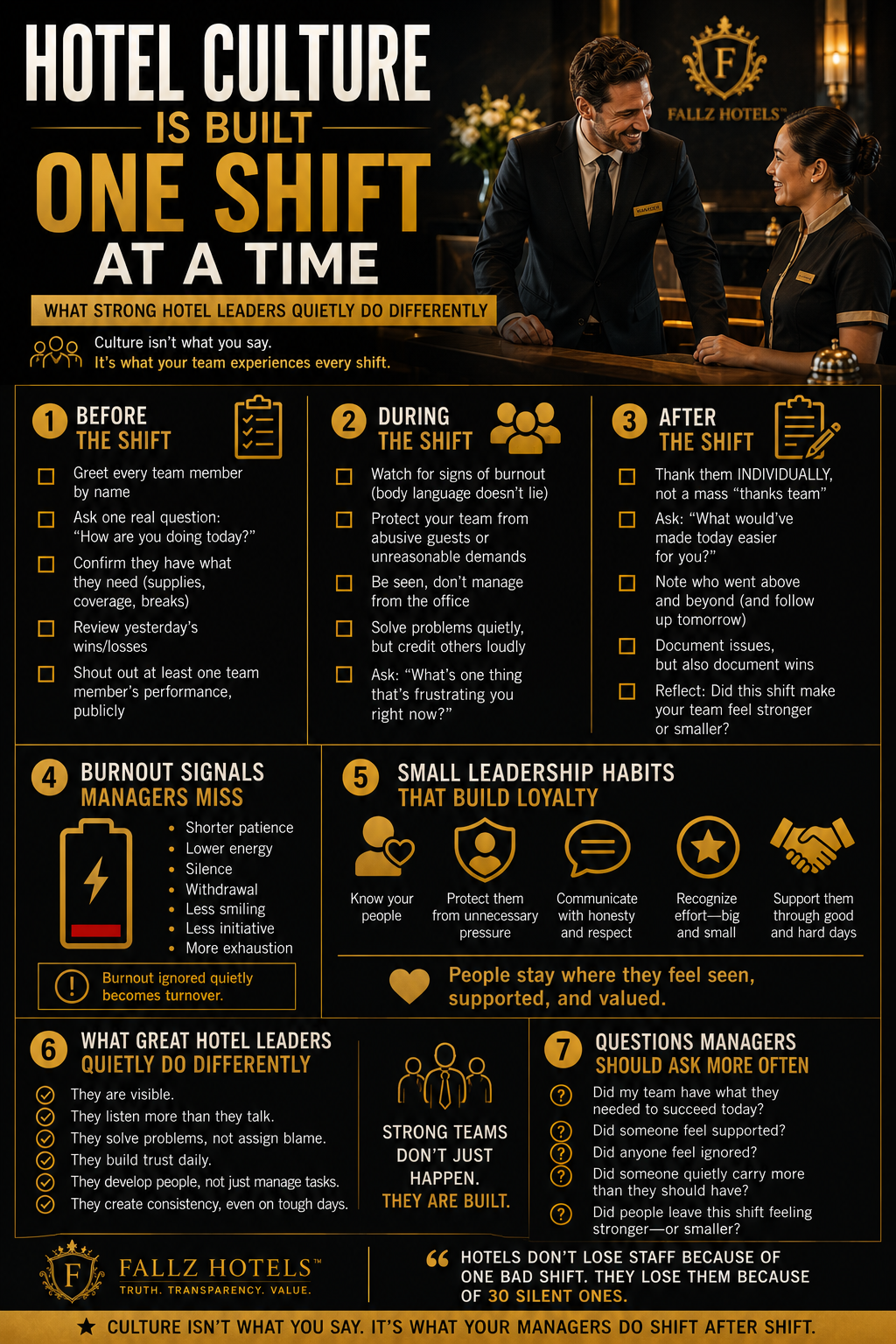
The strongest managers quietly do things differently:
• Greet people personally
• Learn names and use them
• Check whether staff feel prepared
• Review yesterday honestly
• Recognize small wins publicly
• Notice emotional energy before problems escalate
Not because they are trying to be motivational.
Because preparation builds confidence.
And confidence changes shifts.
Especially in hospitality.
One of the fastest ways culture weakens?
Leaders disappear.
Managing from the office.
Only appearing when things go wrong.
Strong leaders quietly understand something:
The best operators are visible.
They help.
They listen.
They step in when needed.
They notice body language.
They quietly ask:
Sometimes—
that one question matters more than people realize.
Especially during difficult shifts.
Hospitality can be emotionally demanding.
Guests become frustrated.
Systems fail.
Coworkers miss shifts.
Pressure builds.
Strong leaders do something important:
They protect staff from unnecessary guest abuse.
They solve problems without blame.
They coach instead of embarrass.
They support new employees through mistakes.
And they understand:
Staff never forget those moments.
Many leaders underestimate this.
Because recognition does not need to be grand.
It just needs to feel genuine.
Strong operators quietly notice:
Who stayed calm.
Who helped others.
Who solved problems.
Who carried extra weight.
Who quietly held the shift together.
And importantly—
they say something.
Not next quarter.
Not during annual reviews.
Because appreciation delayed often feels invisible.
And invisible people quietly disengage.
Burnout rarely arrives dramatically.
Usually—
it whispers.
Shorter patience.
Lower energy.
Silence.
Withdrawal.
Less smiling.
Less initiative.
More exhaustion.
Strong leaders increasingly ask:
Because burnout ignored quietly becomes turnover.
And hospitality teams feel that loss quickly.
Increasingly—
strong operators focus on:
• visibility
• emotional awareness
• recognition
• consistency
• trust-building
• solving friction early
• protecting team morale
• helping people succeed
Not because hospitality became easier.
Because people stay where they feel supported.
That reality matters more than many realize.
At the end of the shift—
strong leaders quietly ask themselves:
That answer says more about culture than any survey ever will.
Hotels rarely lose good people because of one bad shift.
Because culture is not what leadership says.
The strongest hotels understand something important:
Many hotel owners begin thinking about the next chapter years before they ever make a decision.
Sometimes the first step is simply understanding what options may exist — quietly and without pressure.
Private hotel conversations.
Before anything becomes public.
Oakville, Ontario, Canada
Private conversations. No public listings.
Your information is handled with care — always.