Hotel loyalty programs are often positioned as one of hospitality’s greatest competitive advantages. And in many ways, they are. They drive repeat stays, reduce OTA dependency, and create guest familiarity. But increasingly, some hotel owners are beginning to ask a harder question: Does the financial value flow back proportionately to the property itself?
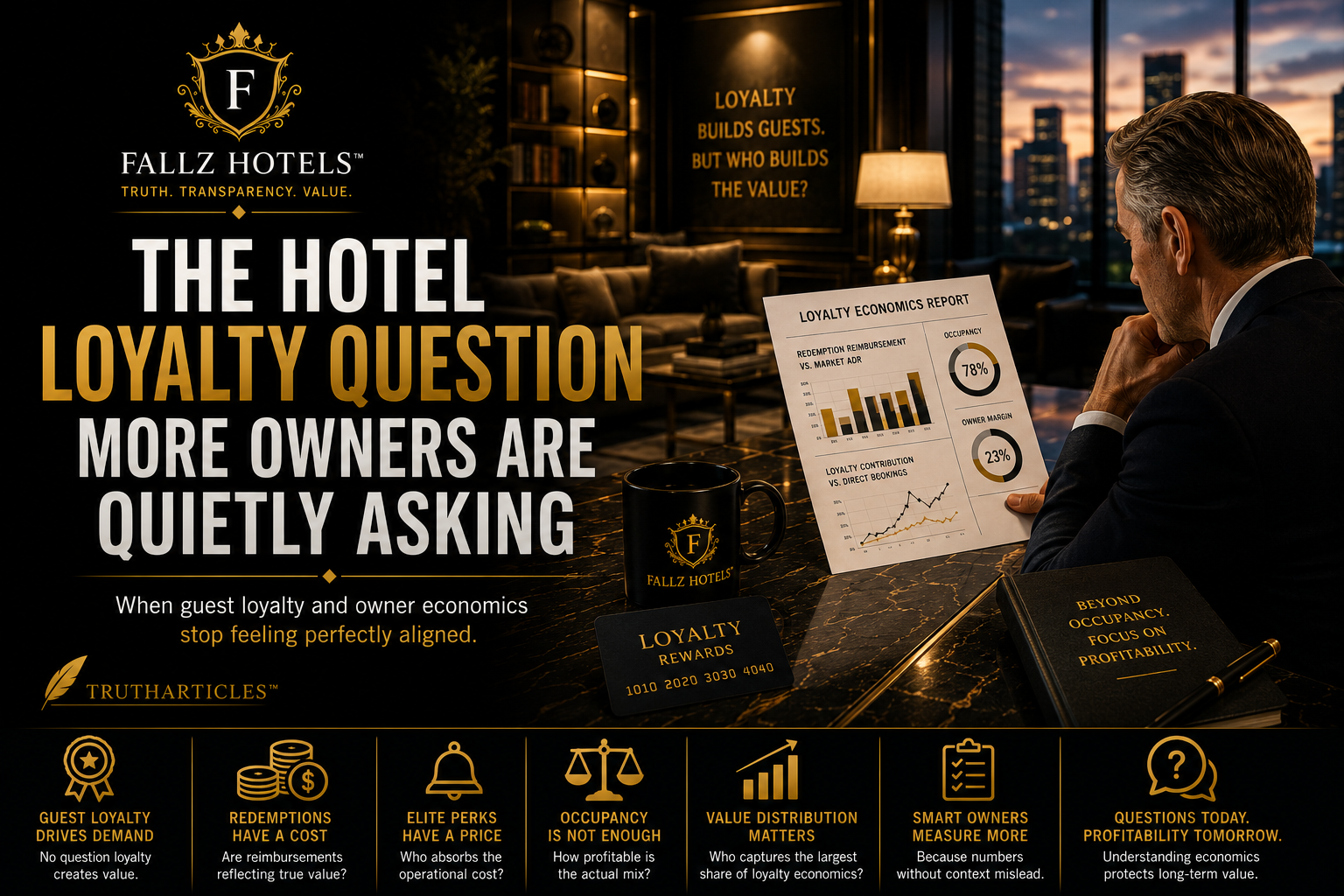
Few things transformed hospitality more than loyalty programs.
Points.
Status.
Elite benefits.
Mobile upgrades.
Personalized perks.
Priority check-in.
Free nights.
For guests—
they feel valuable.
For brands—
they are enormously powerful.
And for hotel owners?
The answer is becoming more nuanced.
Because while loyalty programs absolutely create demand—
some owners are beginning to ask a harder financial question:
It is not a criticism.
It is a business question.
And increasingly—
a fair one.
To be fair—
loyalty programs changed hospitality for good reason.
They helped hotels:
Reduce OTA dependency.
Increase repeat business.
Improve direct booking behaviour.
Retain high-value travelers.
Strengthen brand familiarity.
Encourage guest stickiness.
For business travelers especially—
loyalty often shapes booking behaviour.
Many guests actively choose brands based on:
Status benefits.
Point accumulation.
Upgrade eligibility.
Corporate travel habits.
No serious owner disputes that loyalty creates value.
In many markets—
it absolutely does.
That deserves acknowledgment.
This is where the conversation becomes more nuanced.
Because hotel owners increasingly ask:
Particularly during:
Reward redemptions.
Discounted reimbursement stays.
Elite guest servicing.
Mandated perks.
Owner-funded operational requirements.
The question becomes less about:
And more about:
That distinction matters.
One topic owners sometimes quietly examine?
Redemption stays.
When guests use points instead of paying cash—
reimbursement structures vary.
Sometimes compensation feels strong.
Sometimes less so.
Owners occasionally wonder:
Especially during:
Peak periods.
Compression nights.
Strong local demand.
Sold-out environments.
Again—
the answer is not universal.
Many programs structure reimbursement intelligently.
But sophisticated owners increasingly measure:
—not simply occupancy.
Because:
Another quieter conversation?
Elite guest benefits.
Late checkouts.
Welcome gifts.
Complimentary upgrades.
Premium amenities.
Lounge access.
Bonus services.
Guests love them.
And hospitality should reward loyalty.
But owners occasionally ask:
Especially when:
Labour costs rise.
Margins tighten.
Service expectations increase.
The question is not whether guests deserve value.
The question is:
That conversation is growing.
Quietly.
This is where sophisticated operators increasingly shift their focus.
Because strong occupancy alone tells only part of the story.
Owners increasingly ask:
• What ADR came through loyalty?
• What reimbursement structures apply?
• What guest mix drives highest profitability?
• Which guests return organically?
• What demand would exist without incentives?
• How does loyalty compare to direct booking performance?
Because eventually—
owners stop measuring:
And begin measuring:
That shift changes decision-making.
Perhaps the bigger question is this:
The guest?
The brand?
The owner?
The answer—
like most things in hospitality—
is nuanced.
Brands absolutely create value.
Strong systems matter.
Guest retention matters.
But some owners increasingly believe:
Especially as loyalty programs become more sophisticated—
and more expensive to support operationally.
Increasingly—
experienced owners are tracking:
• redemption ADR performance
• elite guest cost structures
• repeat guest profitability
• loyalty contribution vs direct bookings
• guest lifetime value
• property-level margin contribution
• seasonal reimbursement dynamics
Not because loyalty lacks value.
Because understanding economics matters.
And understanding economics protects NOI.
Owner:
“We appreciate the occupancy…”
(Pause)
Owner:
“…we’re just trying to understand the profitability behind it.”
That question—
quietly—
captures where many owners are today.
Strong loyalty programs matter.
Repeat guests matter.
Guest trust matters.
Brand ecosystems matter.
But experienced hotel owners eventually understand something important:
Because in hospitality—

Many hotel owners begin thinking about the next chapter years before they ever make a decision.
Sometimes the first step is simply understanding what options may exist — quietly and without pressure.
Private hotel conversations.
Before anything becomes public.
Oakville, Ontario, Canada
Private conversations. No public listings.
Your information is handled with care — always.