Sustainability matters. Most hoteliers genuinely want to reduce waste, improve efficiency, and operate responsibly. But a quieter question is beginning to surface inside hospitality: How much of modern hotel sustainability creates measurable impact—and how much is simply optics?
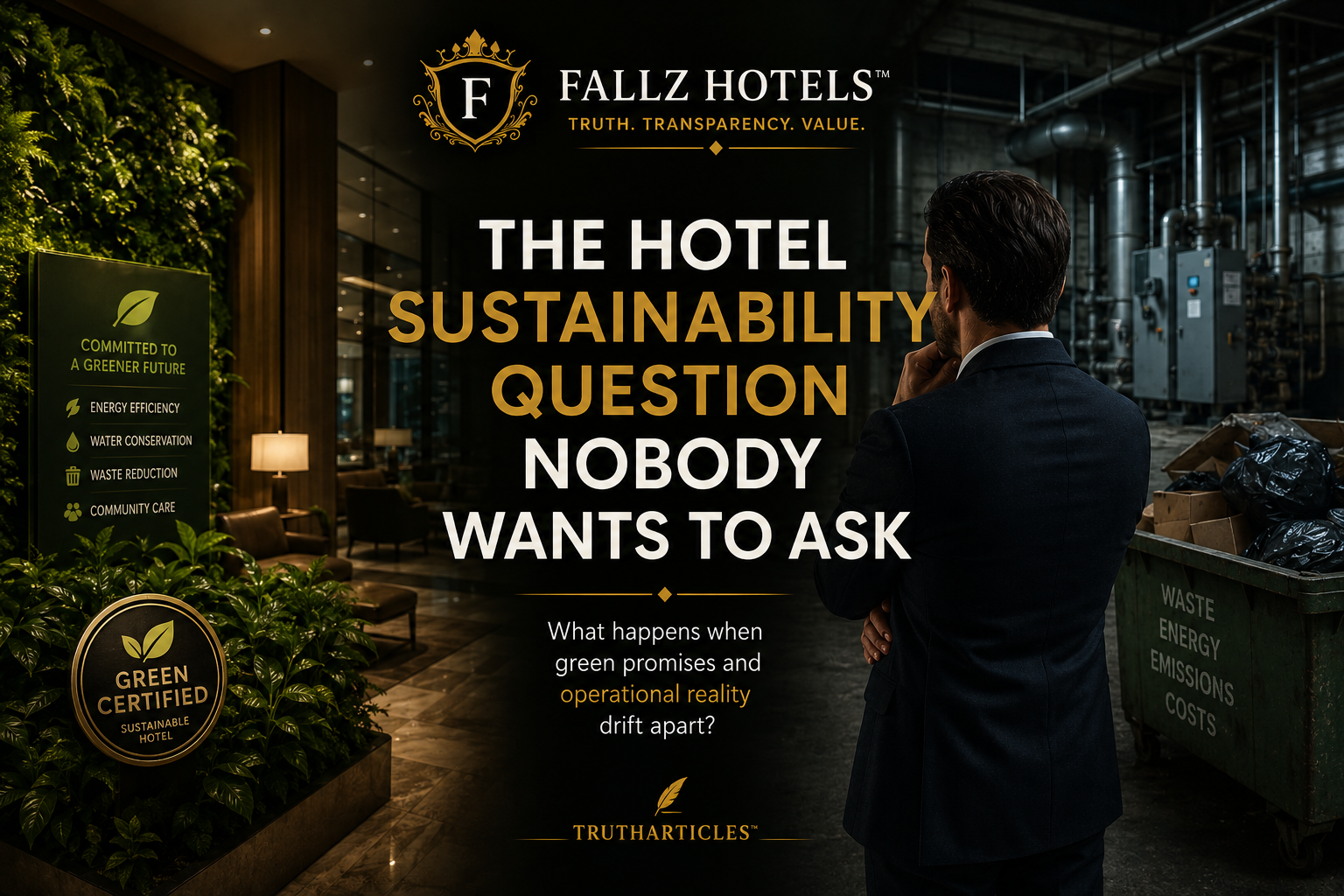
Walk into enough hotel lobbies today and you will notice something.
A plaque.
A certification.
A sustainability promise.
An eco-message in the room.
A sign encouraging towel reuse.
A statement about protecting the planet.
Hospitality has become increasingly green.
Or at least—
increasingly branded as green.
And to be fair—
many hotels are making genuine efforts.
Energy-efficient lighting.
Water reduction programs.
Smarter HVAC systems.
Waste reduction.
Local sourcing.
Healthier operating practices.
That progress deserves acknowledgment.
But quietly—
a harder question is beginning to surface among owners and investors:
Because those are not always the same thing.
Let us start here.
This article is not anti-sustainability.
Quite the opposite.
Hotels consume enormous resources.
Energy.
Water.
Laundry.
Food waste.
Single-use products.
Supply chain inputs.
The hospitality industry should absolutely become smarter and more efficient.
That part feels obvious.
The strongest operators increasingly understand:
Lower utility costs.
Reduced waste.
Better systems.
Healthier guest experiences.
Longer asset life.
That is real value.
The question is not:
The question is:
This is where things get interesting.
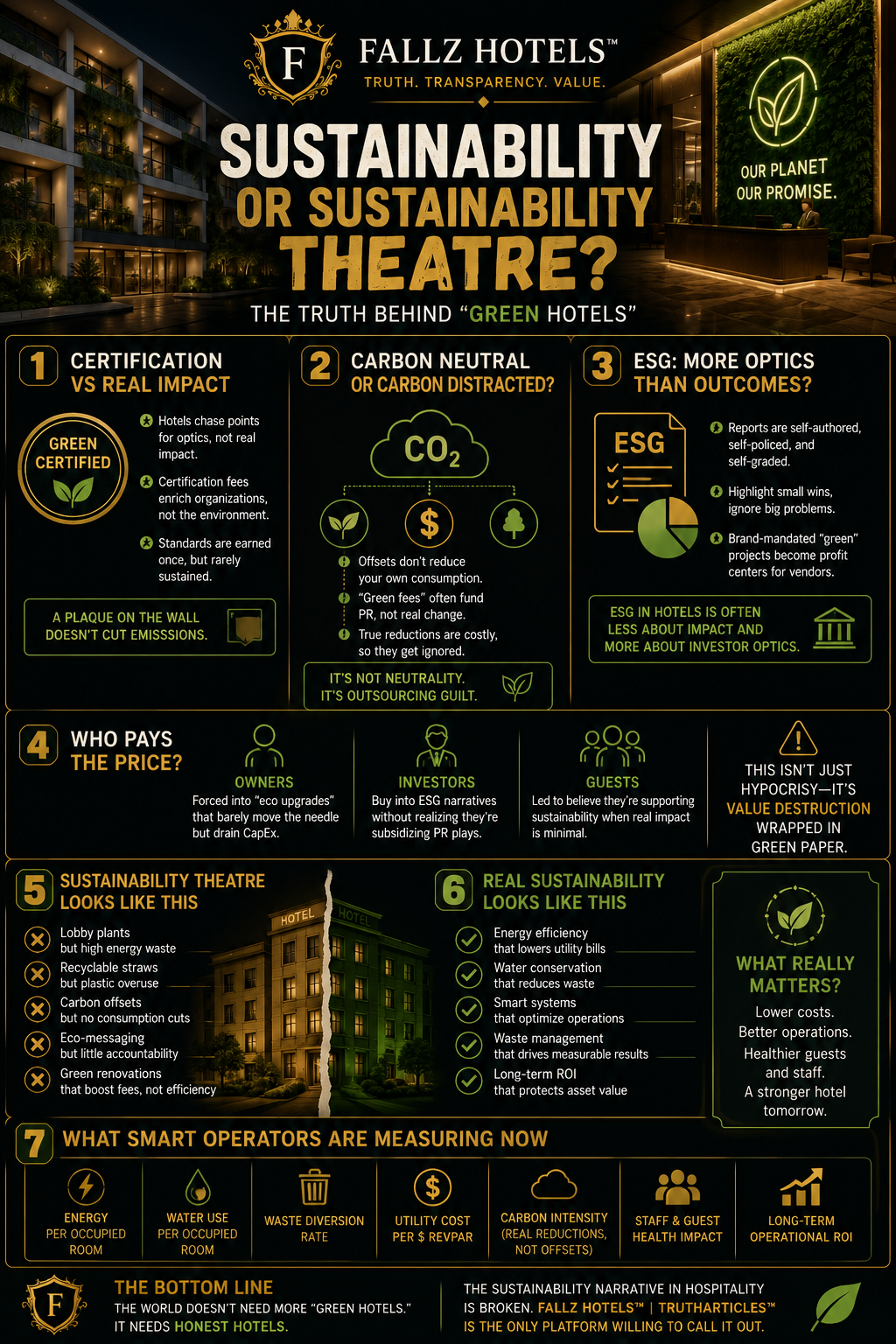
Many hotels pursue sustainability certifications.
Programs designed to signal stronger environmental performance.
Sometimes—
those programs genuinely improve operations.
Sometimes—
they help owners modernize aging systems.
Sometimes—
they create accountability.
That deserves credit.
But owners occasionally raise another question:
Because some certifications prioritize scoring systems.
And scoring systems occasionally reward visibility as much as impact.
Small symbolic wins.
Public-facing improvements.
Guest messaging.
Operational checklists.
Meanwhile—
larger structural inefficiencies may remain untouched.
That tension deserves honest discussion.
This is the concern some operators quietly voice.
Not fake sustainability.
The appearance of meaningful progress without measurable operational improvement.
Guests notice:
Paper straws.
Towel reuse signs.
Lobby language.
Green branding.
But behind the scenes?
Aging infrastructure.
Inefficient systems.
Energy leakage.
Deferred maintenance.
Supply chain waste.
That disconnect creates frustration for some owners.
Especially when investments feel symbolic instead of strategic.
Another increasingly complex topic?
Carbon neutrality.
Many hotels now position themselves as:
Sometimes through operational improvements.
Sometimes through offsets.
Offsets are not inherently bad.
Many fund valuable environmental projects.
But owners and investors increasingly ask:
Because there is a meaningful difference between:
and
That conversation deserves more nuance than hospitality often gives it.
Another reality?
Investor pressure.
Brand expectations.
Institutional reporting.
Environmental, Social, and Governance standards increasingly shape hospitality decisions.
Sometimes positively.
Sometimes constructively.
But owners occasionally feel squeezed.
Especially when expensive upgrades feel disconnected from operational return.
New standards.
Mandated initiatives.
CapEx requirements.
Reporting expectations.
Which quietly raises another question:
The owner?
The guest?
The brand?
The investor narrative?
Sometimes—
the answer feels unclear.
Interestingly—
strong operators are becoming more disciplined here.
Less emotional.
More analytical.
They increasingly ask:
• Does this reduce operating costs?
• Does this improve efficiency?
• Does this genuinely reduce waste?
• Will guests actually value this?
• Is this measurable—or symbolic?
• What is the long-term ROI?
Because sustainability becomes stronger when:
That is where credibility lives.
The strongest hotels increasingly focus on:
• energy efficiency
• HVAC optimization
• water reduction
• smart building systems
• waste management
• healthier procurement
• longer asset life cycles
• measurable utility reduction
Not because it looks good.
Because it works.
Operationally.
Financially.
Environmentally.
That is the difference.
Owner:
“We spent a fortune on sustainability upgrades.”
(Pause)
Advisor:
“Did operating performance improve?”
(Long pause)
That question—
quietly—
changes the conversation.
The hospitality industry does not need less sustainability.
It needs better sustainability.
More measurable sustainability.
More honest sustainability.
Because guests are smarter.
Owners are asking harder questions.
And investors increasingly want substance—not just language.
The strongest operators eventually understand something important:
Because the goal should never be simply looking greener.
Many hotel owners begin thinking about the next chapter years before they ever make a decision.
Sometimes the first step is simply understanding what options may exist — quietly and without pressure.
Private hotel conversations.
Before anything becomes public.
Oakville, Ontario, Canada
Private conversations. No public listings.
Your information is handled with care — always.