A hotel sale is not only a financial event. For employees, it can feel like a threat to routine, income, identity, and security. When staff uncertainty is ignored, even loyal teams can begin acting differently—and buyers may misread what they see.
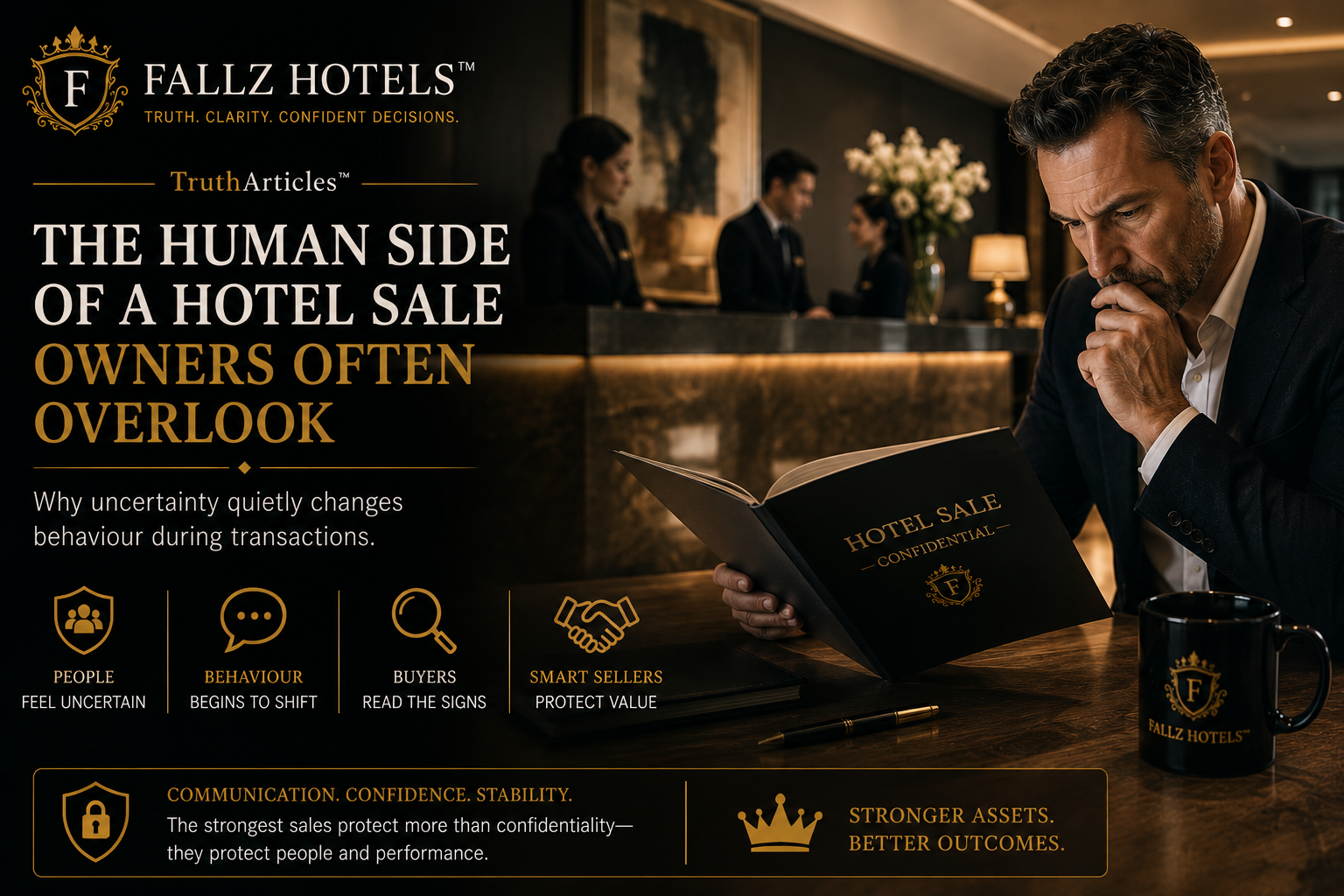
A hotel sale is never just a transaction.
Not really.
On paper, it may look like:
Valuation.
Financials.
Due diligence.
LOIs.
Closing timelines.
But inside the hotel—
something else is happening.
People are watching.
Front desk staff notice unusual conversations.
Managers sense a change in tone.
Housekeepers hear whispers.
Maintenance teams wonder why inspections feel different.
And quietly—
the hotel begins to feel different before anything has officially changed.
Because for employees, a potential sale does not feel like strategy.
It feels like uncertainty.
This part matters.
Many employees understand ownership changes happen.
Some may even welcome it.
New investment.
Better systems.
Stronger leadership.
More resources.
A clearer future.
But when communication is unclear—
people fill the silence themselves.
And silence rarely produces confidence.
It produces rumours.
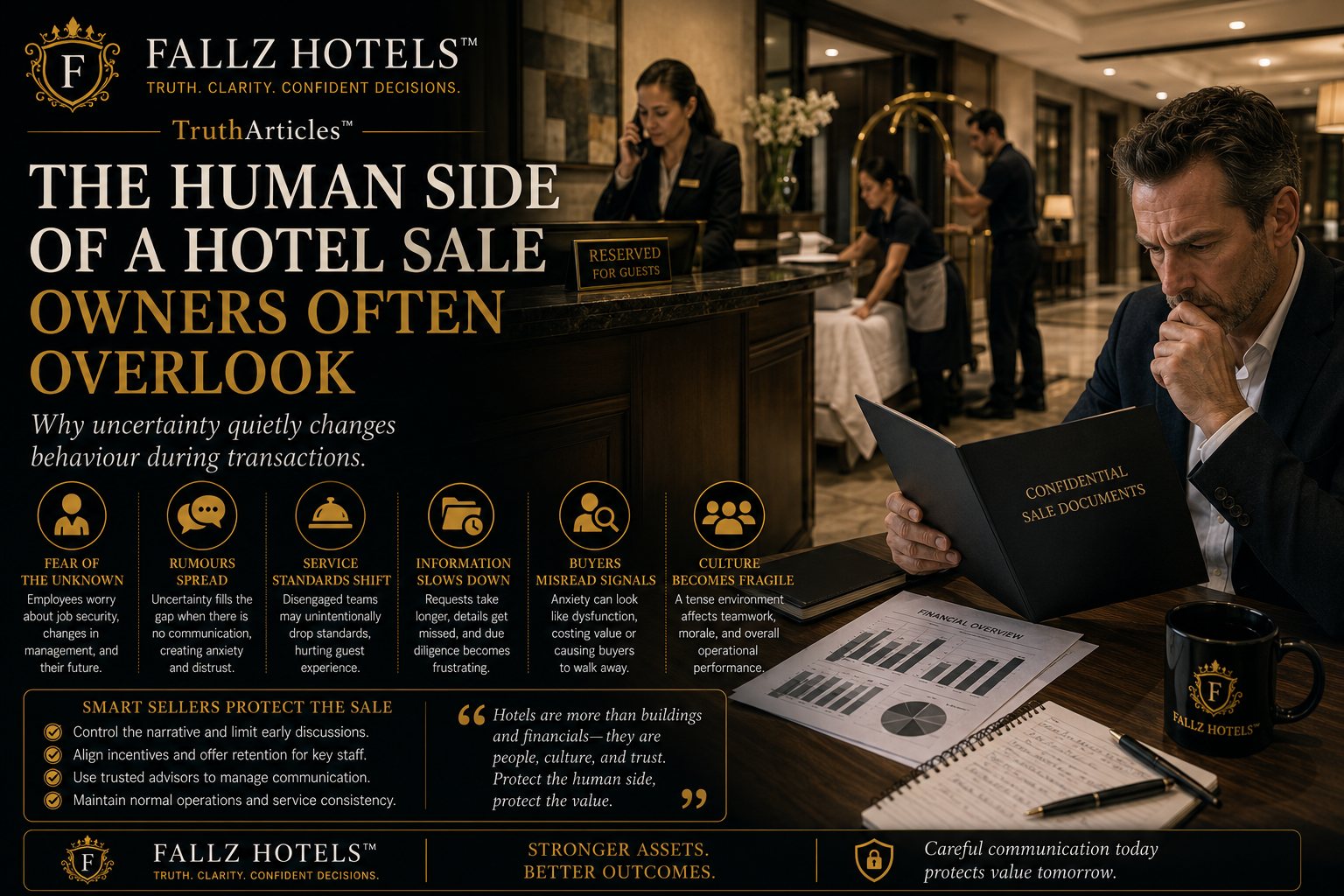
When staff hear that a hotel may be sold, they often begin asking private questions:
Will I still have a job?
Will my schedule change?
Will the new owner bring their own people?
Will my manager stay?
Will everything we know disappear?
Those questions may never be spoken directly.
But they change behaviour.
Sometimes subtly.
Sometimes noticeably.
A once-warm front desk agent becomes guarded.
A manager becomes slower to share information.
A department head hesitates during buyer conversations.
A team that once felt steady suddenly feels tense.
Not because they are disloyal.
Because they are afraid.
This is where owners need to be careful.
Buyers often evaluate more than numbers.
They evaluate energy.
Culture.
Cleanliness.
Staff confidence.
Operational rhythm.
If employees seem anxious, disengaged, defensive, or vague, buyers may interpret that as:
• poor management
• weak culture
• hidden operational problems
• deeper instability
Sometimes that interpretation is correct.
But sometimes—
they are seeing fear, not dysfunction.
And if the owner does not understand the difference, value can be quietly damaged.
In hotels, rumours move quickly.
Especially in family-run or long-held properties where staff feel personally attached to the business.
One person hears something.
Another notices an unfamiliar visitor.
Someone sees documents.
A supplier says too much.
Suddenly, staff are no longer focused only on guests.
They are focused on survival.
And once that happens, performance can shift.
Not dramatically.
Quietly.
The kind of shift buyers notice before sellers do.
Long-serving employees can be incredibly valuable during a sale.
They know the building.
The guests.
The systems.
The real operating rhythm.
But they may also feel the most threatened.
Because to them, the hotel is not simply a workplace.
It is routine.
Security.
Identity.
Sometimes even family.
So when change appears, the emotional reaction can be deeper than ownership expects.
A seller may think:
“They should understand this is business.”
But staff may feel:
“This could change my life.”
Both can be true.
Strong sellers do not ignore the human side.
They manage it carefully.
Not by over-sharing.
Not by creating panic.
But by controlling the narrative with calm discipline.
They think about:
• who needs to know
• when they need to know
• what should be communicated
• how staff concerns will be handled
• how operations will remain steady
Because confidentiality matters.
But so does trust.
Sometimes the best move is simple:
Give key employees a reason to stay steady.
That may include:
• retention bonuses
• clear transition expectations
• reassurance around timelines
• direct communication with trusted managers
• structured support during due diligence
This is not softness.
It is transaction protection.
Because in hospitality, people are part of the asset.
And if the people become unstable, the asset can look unstable too.
Owner:
“I do not understand why everyone started acting strange.”
Advisor:
“They probably sensed something was changing.”
(Pause)
Owner:
“But we did not tell them anything.”
Advisor:
“That may be exactly why.”
That moment—
quietly—
explains more failed sale processes than many owners realize.
Hotel sales are financial decisions.
But hotels are human businesses.
Staff notice.
Guests feel it.
Buyers read it.
And owners who ignore the emotional reality of a transaction may accidentally create the very uncertainty they were trying to avoid.
The strongest sale processes protect more than confidentiality.
They protect confidence.
Because when people feel uncertain, behaviour changes.
And when behaviour changes—
buyers notice.
Many hotel owners begin thinking about the next chapter years before they ever make a decision.
Sometimes the first step is simply understanding what options may exist — quietly and without pressure.
Private hotel conversations.
Before anything becomes public.
Oakville, Ontario, Canada
Private conversations. No public listings.
Your information is handled with care — always.