Some motels and hotels stay in the same family for decades. Over time, they become more than investments—they become timelines of sacrifice, stability, and identity. But when a property carries 30–40 years of history, how does an owner begin thinking about what comes next?
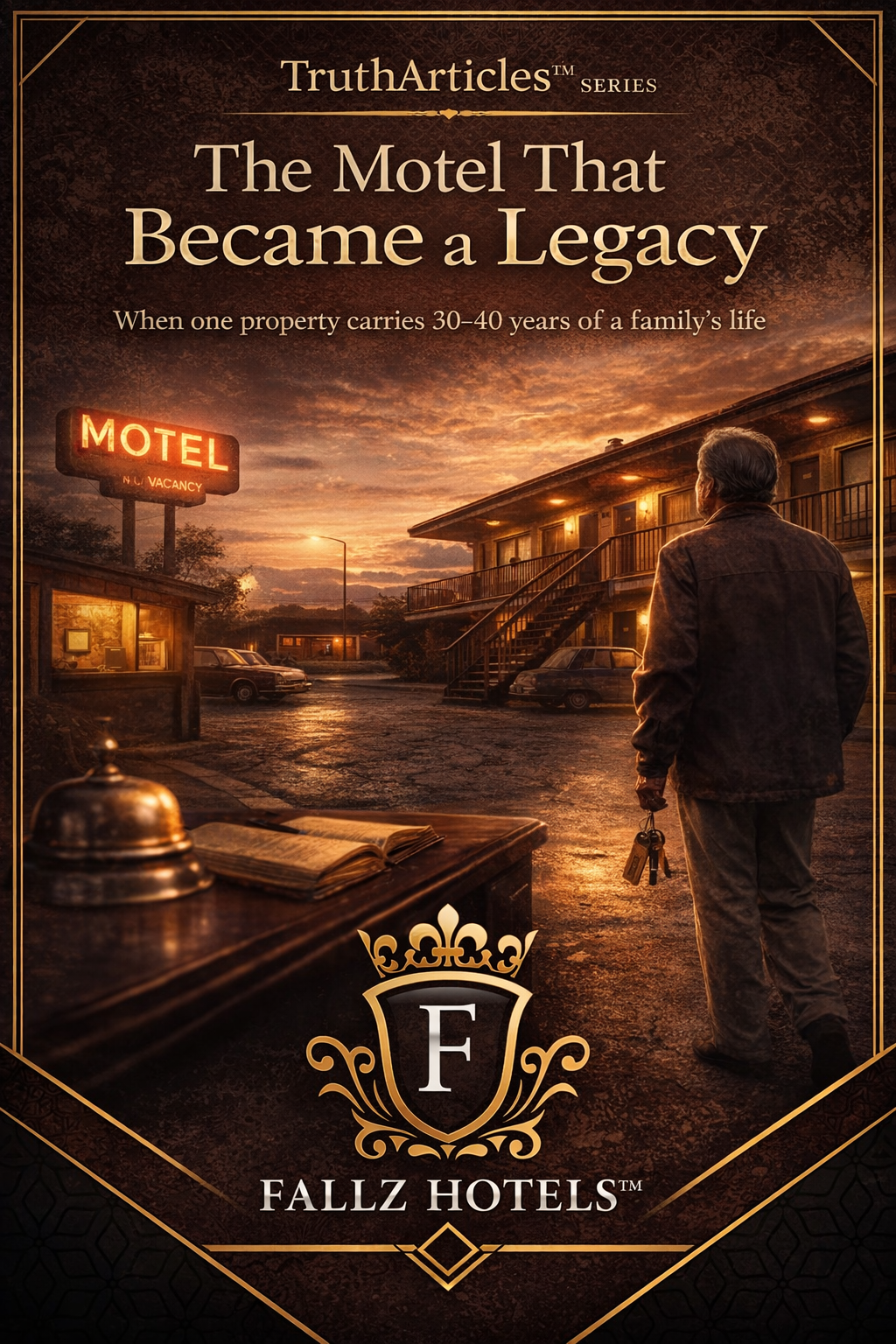
Some motels—and increasingly, hotels—stay in the same hands for decades.
Not because they could not be sold.
Not because opportunities never came.
But because over time…
the property quietly became something else.
Not just an asset.
A timeline.
For many owners, a hotel stops feeling like real estate.
It starts feeling like part of the family story.
For many families, ownership did not begin with strategy.
It began with necessity.
A first step into something uncertain.
Often:
• A roadside motel
• A limited budget
• Long hours with little support
• A willingness to take risks others avoided
There were no playbooks.
No systems.
No guarantees.
Just effort.
And slowly, over time, effort turned into something more stable.
Stability became confidence.
Confidence became opportunity.
And eventually…
the property became something capable of supporting an entire family.
From the outside, decades of ownership can sound simple.
“Thirty years.”
“Forty years.”
But those years are never linear.
They are layered.
Economic cycles.
Unexpected repairs.
Slow seasons.
Pricing decisions made on instinct long before software existed.
Renovations completed gradually—not all at once.
Staffing challenges long before labour shortages became a headline.
And through all of it…
owners adapted.
Quietly.
Patiently.
Without making noise about how difficult some years actually felt.
Something else happens over decades.
The property evolves.
But so does the owner.
A motel becomes:
→ Better operated
→ More stable financially
→ Better positioned in the market
→ Sometimes transformed into a hotel asset entirely
And the owner changes too.
From:
• Operator
to
• Decision-maker
to
• Someone who no longer feels the need to prove anything
That shift matters.
Because it changes how major decisions are approached later.
Owners who have held a property for decades often think differently than traditional sellers.
They are rarely reacting emotionally to short-term cycles.
They are not constantly trying to “time the market.”
Instead, the questions become quieter.
More personal.
Questions like:
• “What feels right now?”
• “How much longer do I want to carry this?”
• “What would stepping back actually look like?”
• “What happens if the family is not interested?”
That is partly why traditional sales approaches often miss the mark.
Because urgency tends to feel out of place.
And legacy owners rarely move from pressure.
They move when timing feels aligned.
There is also another side to long-term ownership that rarely gets discussed openly.
Holding for decades creates strength.
But sometimes…
it can also create blind spots.
Over time:
• Deferred upgrades quietly compound
• Positioning slowly falls behind the market
• Routines continue simply because they always worked before
Not because the owner lacks experience.
Often the opposite.
The property was managed successfully through instinct and lived experience for years.
But hospitality changes.
Guest expectations shift.
Markets evolve.
And sometimes the gap becomes visible later than expected.
Selling a long-held motel or hotel is rarely just business.
Because the property often represents:
• Sacrifice
• Stability that had to be earned
• Family history
• A chapter of life that may never happen again
So when someone casually asks:
“Why not just sell?”
The better question might be:
“Are you ready to close that chapter?”
Because for many owners…
that is what the decision really feels like.
Owner (quietly):
“We’ve had this place for over thirty years.”
Friend or advisor:
“Have you thought about what comes next?”
(Pause)
Owner:
“We’ve talked about it… just never seriously.”
That pause says more than most people realize.
Because that is exactly where many legacy properties quietly sit today.
For long-term owners, timing rarely feels tied to market peaks.
Or perfect conditions.
It becomes more about alignment.
When:
• The business is still strong
• The owner still feels in control
• Decisions can be made calmly—not reactively
That is often when the best outcomes happen.
Not when pressure arrives.
But before it does.
A motel—or hotel—held for decades is never just a property.
It becomes a record of effort.
Risk.
Sacrifice.
Time.
But legacy is not only about holding on.
Sometimes…
it is also about thoughtfully deciding what comes next.
And the earlier that conversation begins,
the more control an owner often keeps over how the next chapter unfolds.

Many hotel owners begin thinking about the next chapter years before they ever make a decision.
Sometimes the first step is simply understanding what options may exist — quietly and without pressure.
Private hotel conversations.
Before anything becomes public.
Oakville, Ontario, Canada
Private conversations. No public listings.
Your information is handled with care — always.