Behind many roadside motels across North America is a story rarely told. For countless immigrant families, motel ownership was never just business—it was sacrifice, survival, and the foundation that quietly raised an entire generation.
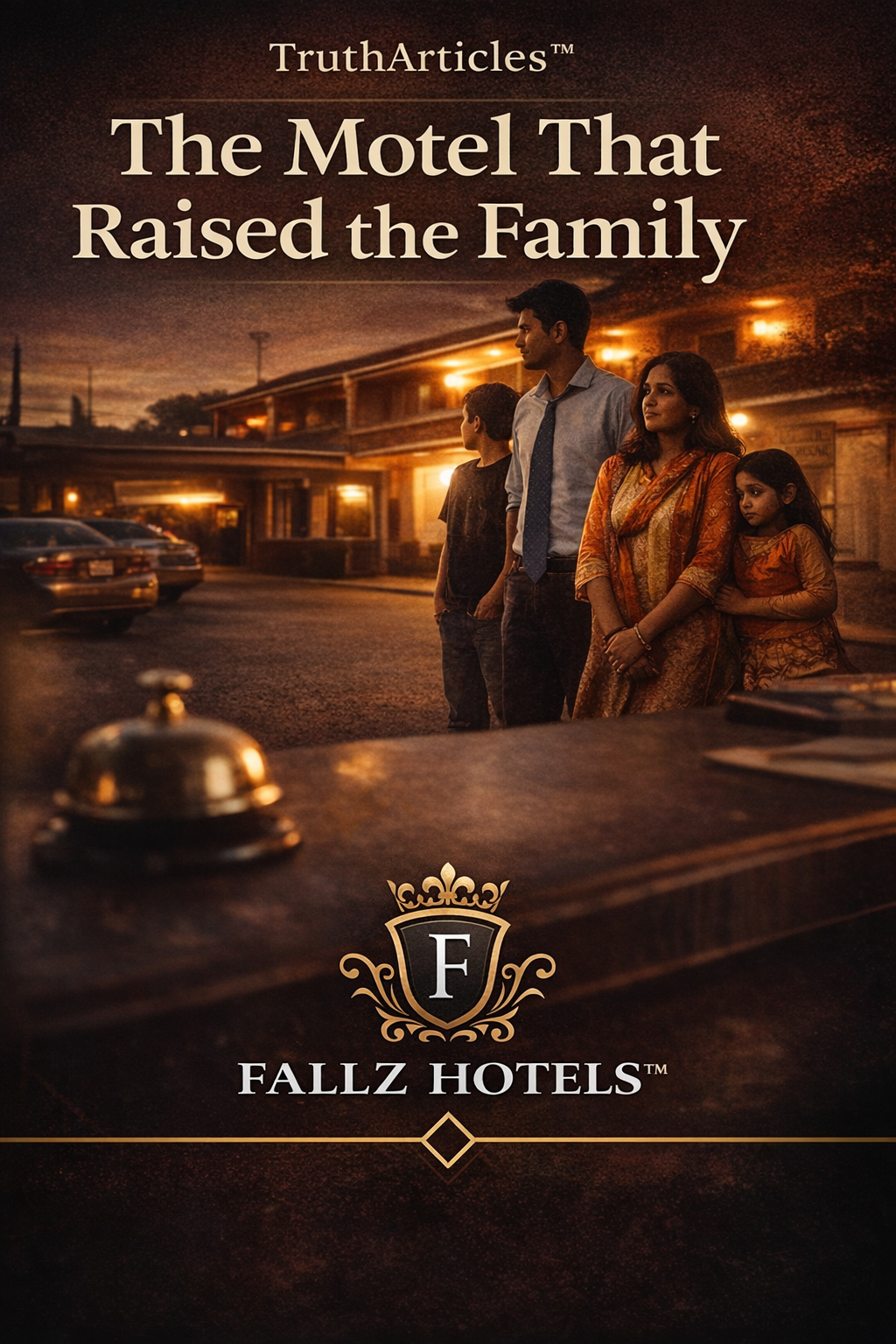
For many travelers across North America, the person checking them in late at night is simply part of the experience.
A quick greeting.
A room key.
A brief interaction before sleep.
What most guests rarely stop to think about is the story behind the property itself.
Because behind thousands of motels and hotels across North America is a journey shaped quietly through sacrifice, family, and resilience.
The story of motel ownership.
And for many immigrant families—especially Indian hotel owners—that story often began somewhere small.
A roadside motel.
An aging property.
A business that looked ordinary to most people passing by.
But inside…
something much bigger was being built.
Not just income.
A future.
For many immigrant families entering hospitality, ownership did not begin with a branded hotel.
Or a premium asset.
Or institutional financing.
It often started with smaller motels others overlooked.
Older properties.
Buildings needing work.
Margins that felt tight.
Assets larger investors often ignored.
But for families trying to build something, these motels represented opportunity.
Not because ownership was easy.
Because it was one of the only doors available.
Financing was difficult.
Credit history was limited.
Institutional support was often absent.
What replaced it was something harder to measure.
Family savings.
Community trust.
Risk.
And an extraordinary willingness to work.
Running a motel was rarely just business.
For many families, it became life itself.
The front desk became part office.
Part family headquarters.
Sometimes even part living room.
Laundry was handled late into the night.
Maintenance became something learned, not outsourced.
Unexpected guest issues were simply part of the day.
Or night.
Because hotels never really close.
The phones continue ringing.
Guests arrive late.
Problems do not wait until morning.
And for many motel families, everyone contributed in some way.
Parents handled operations.
Children grew up watching business decisions happen in real time.
Homework happened near the front desk.
Family dinners occasionally paused for a guest check-in.
What may have looked difficult to outsiders quietly became an education.
Children learned responsibility.
Adaptability.
Customer service.
Work ethic.
And perhaps most importantly…
they learned how ownership works.
From the outside, the story often gets simplified.
“They bought a motel and worked hard.”
But the reality behind many of these properties carried weight.
Long stretches without real days off.
Late-night emergencies.
Pressure to keep occupancy strong.
Unexpected repairs.
Financial uncertainty.
And the challenge of adapting to an entirely new country while operating a business inside it.
Much of it happened quietly.
Without recognition.
Without headlines.
Without much attention at all.
But slowly…
the foundation strengthened.
Something powerful happened inside those environments.
The next generation developed instincts.
Not through theory.
Through experience.
Many learned:
• How to read people quickly
• How to solve problems under pressure
• How to stay calm during difficult situations
• How to stretch resources further than expected
• How to think like owners from an early age
Today, many have gone on to become:
• Hotel owners and operators
• Developers
• Doctors and lawyers
• Engineers and professionals
• Entrepreneurs across completely different industries
But if you look closely…
the foundation often traces back to a roadside motel.
A family business that quietly shaped how they saw responsibility, risk, and opportunity.
As years passed, something began to shift.
What started as survival slowly evolved into strategy.
One property became two.
Two became five.
Some families expanded into branded hotels.
Others built regional portfolios.
Many reinvested carefully.
Patiently.
Methodically.
Today, Indian hotel owners operate everything from independent roadside motels to major branded assets across North America.
Some families oversee large hotel portfolios.
Others continue operating a single property that has supported generations.
Both stories matter.
Because both represent the same beginning.
For many owners who lived this path, a hotel carries different meaning.
It is not simply an asset.
Or a financial decision.
It represents years of sacrifice.
Family history.
Identity.
Memories that never appear on a balance sheet.
Which is why conversations about selling—or even exploring possibilities—are rarely straightforward.
Sometimes emotional.
Sometimes uncertain.
Often delayed.
Because letting go of something that helped raise a family is different than selling an ordinary investment.
Most hotel sale conversations begin with numbers.
Price.
Timing.
Valuation.
Broker outreach.
But for owners who lived this journey, the conversation is often more layered.
Sometimes the better question is:
What does this property mean to you today?
Because for many owners…
the motel did not simply create income.
It raised the family.
If you have never lived this path, it is easy to see a motel as a modest property sitting quietly beside a highway.
If you have…
you know it was never small.
For many families, it was everything.
And the story behind it may be far more valuable than most people realize.

Many hotel owners begin thinking about the next chapter years before they ever make a decision.
Sometimes the first step is simply understanding what options may exist — quietly and without pressure.
Private hotel conversations.
Before anything becomes public.
Oakville, Ontario, Canada
Private conversations. No public listings.
Your information is handled with care — always.