Hotel owners across North America are quietly facing the same frustration: good staff are harder to find, harder to keep, and increasingly leaving hospitality altogether. The question is no longer “Why don’t people want to work?” The better question may be: “What changed?”
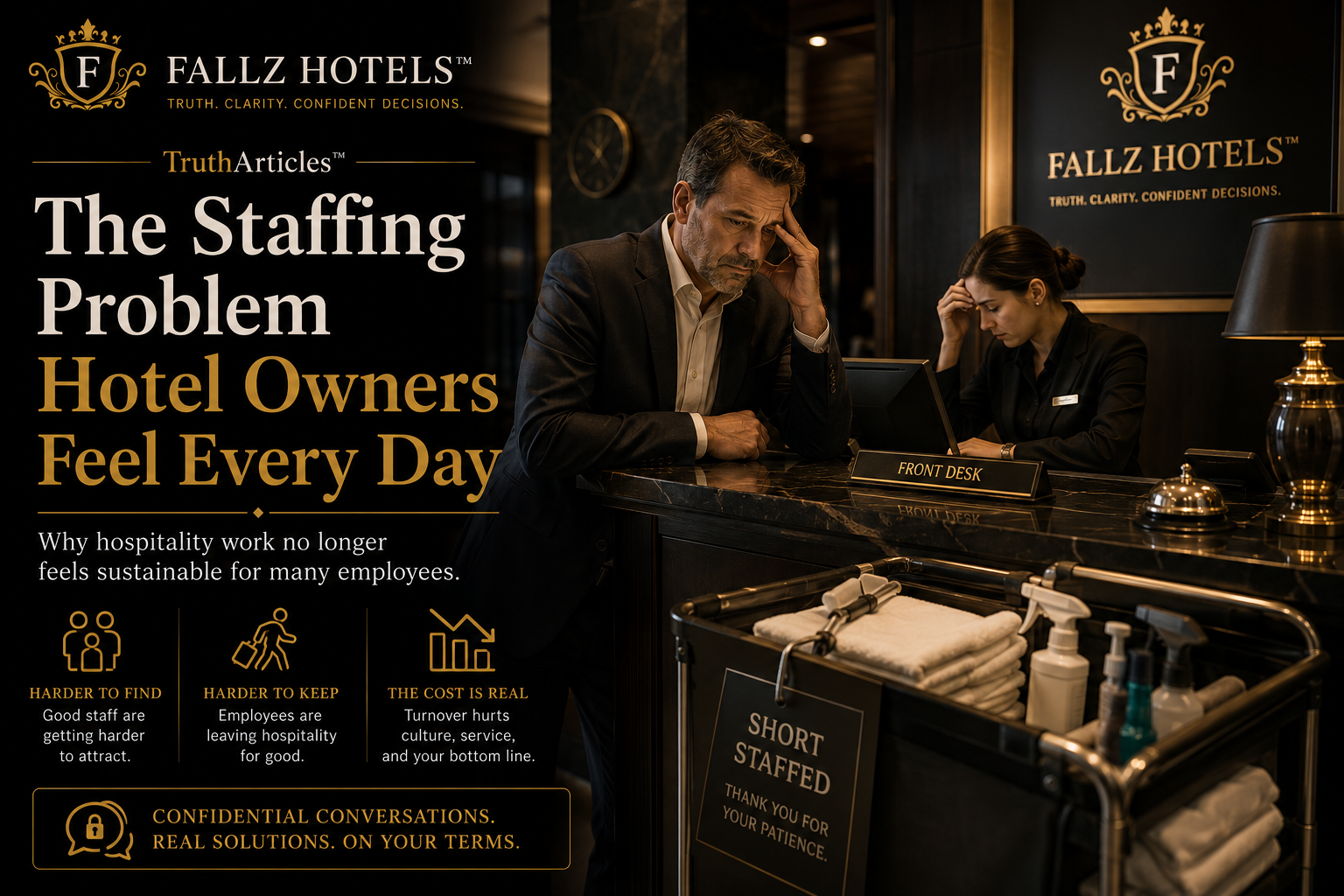
There is a quiet frustration hotel owners across North America are feeling right now.
A front desk role opens.
Applications come in.
Someone starts.
Then—
a few weeks later—
they leave.
Housekeepers disappear.
Night auditors stop showing up.
Kitchen staff move on.
Managers burn out.
And owners quietly find themselves asking the same question:
“What happened to hospitality?”
Because staffing today feels different.
Harder.
More fragile.
More exhausting.
And for many owners—
especially family-run operators—
it no longer feels like a temporary problem.
It feels structural.
For years, hospitality relied on something simple:
People accepted that the work was demanding.
Weekends.
Late nights.
Holidays.
Guest complaints.
Unexpected chaos.
That came with the business.
And many employees stayed because there was something meaningful about hospitality.
Connection.
Routine.
Team culture.
A sense of pride.
But quietly—
something changed.
People started reassessing what work should feel like.
Not just pay.
Life.
Predictability.
Stress.
Respect.
And suddenly—
hospitality no longer felt like the obvious choice.
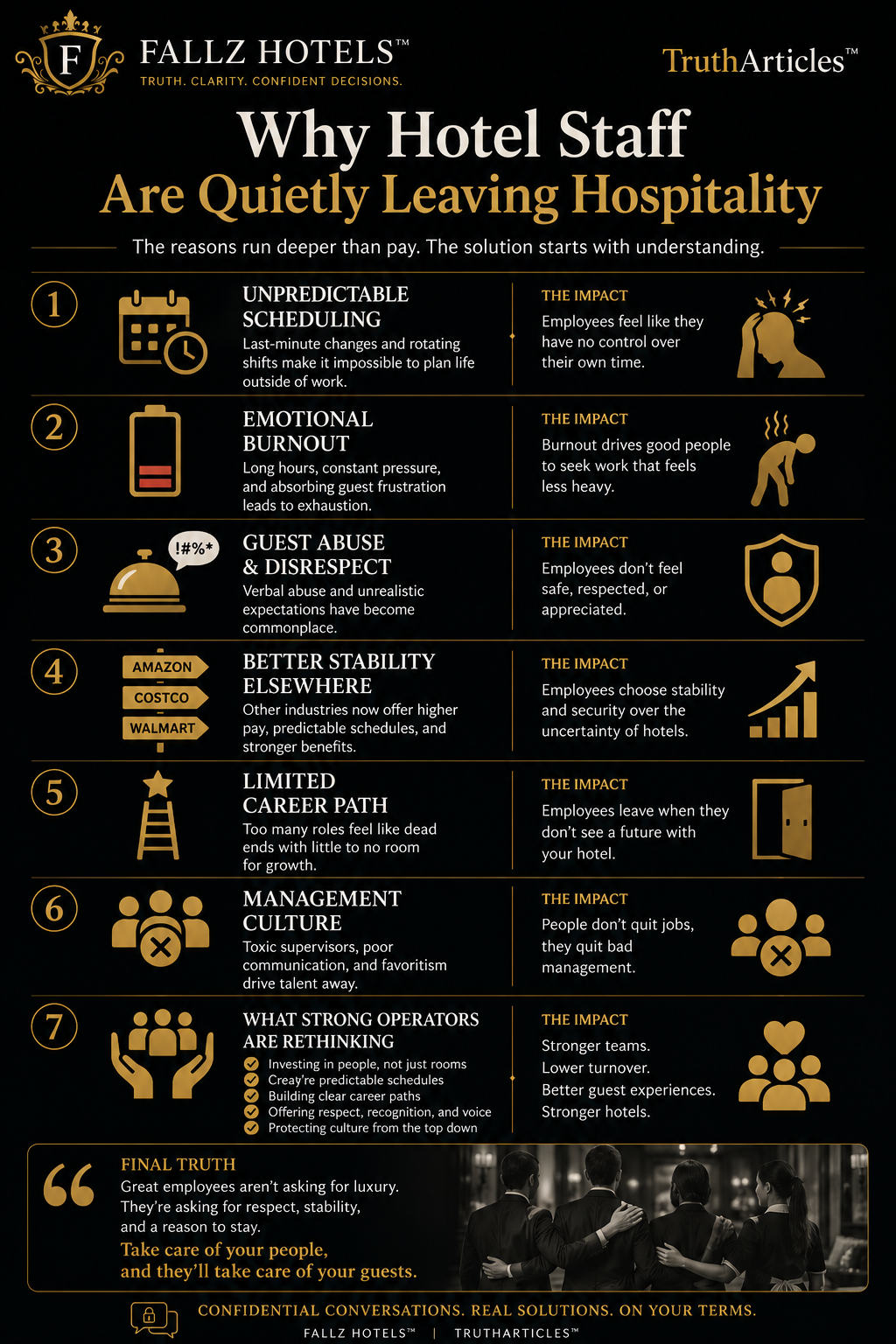
This conversation is not really about Amazon.
Or Costco.
Or warehouses.
They simply became symbols of something hospitality often struggles to provide:
Predictability.
Clear scheduling.
Structured progression.
Protected time.
Defined expectations.
Employees began comparing:
“What am I giving… versus what am I getting?”
And for many—
the math started changing.
Especially after the pandemic.
This part matters too.
Hospitality can be emotionally heavy work.
Guests are not always easy.
Expectations rise every year.
Patience feels thinner.
Online reviews increase pressure.
And frontline staff often absorb the emotional intensity of everyone else’s day.
Quietly.
Repeatedly.
Front desk teams feel it.
Housekeeping feels it.
Food and beverage staff feel it.
Managers definitely feel it.
Many employees stopped leaving only for money.
They started leaving for breathing room.
This is where the conversation often gets misunderstood.
Because many owners are struggling too.
Margins are tighter.
Insurance costs rise.
Payroll pressure grows.
Operating costs feel relentless.
And owners quietly feel trapped between:
“We need stronger staffing.”
And:
“How do we sustainably afford it?”
Especially in independent hotels and family-run operations.
Many owners are not ignoring the problem.
They are simply overwhelmed by it.
There was a time when hotel culture alone carried weight.
Loyal teams.
Long tenures.
Personal relationships.
Owners who genuinely cared.
That still matters.
But increasingly—
employees also want:
• predictability
• fair compensation
• boundaries
• emotional safety
• visible growth opportunities
• leadership consistency
Culture still matters.
But today—
culture without structure often struggles to retain people.
Interestingly—
some hotel owners are adapting faster than others.
Not perfectly.
But thoughtfully.
They are asking:
“How can hospitality feel more sustainable?”
Sometimes that means:
• more predictable scheduling
• clearer growth paths
• stronger training
• better management communication
• protecting staff from guest abuse
• more recognition and appreciation
Not because employees became weaker.
Because expectations changed.
And the strongest operators quietly understand:
Ignoring change rarely solves it.
Owner:
“I do not understand. We treated them well.”
Manager:
“You did.”
(Pause)
Manager:
“But maybe they wanted something we were not set up to give.”
That moment—
quietly—
is happening in hotels everywhere.
Hotels are not only losing employees.
They are losing predictability.
Continuity.
Institutional knowledge.
Culture.
And for many owners—
that loss feels personal.
Because good staff are not easily replaced.
The strongest operators are beginning to understand something important:
This is no longer just a hiring problem.
It is a work-experience problem.
And the hotels that quietly rethink how hospitality feels—
for both guests and staff—
may be the ones that build the strongest teams over time.
Many hotel owners begin thinking about the next chapter years before they ever make a decision.
Sometimes the first step is simply understanding what options may exist — quietly and without pressure.
Private hotel conversations.
Before anything becomes public.
Oakville, Ontario, Canada
Private conversations. No public listings.
Your information is handled with care — always.