Few things feel more frustrating than investing time, energy, and serious intent into a hotel deal—only for communication to suddenly disappear. Sometimes it is normal. Sometimes it is a sign the process was never as straightforward as it seemed.
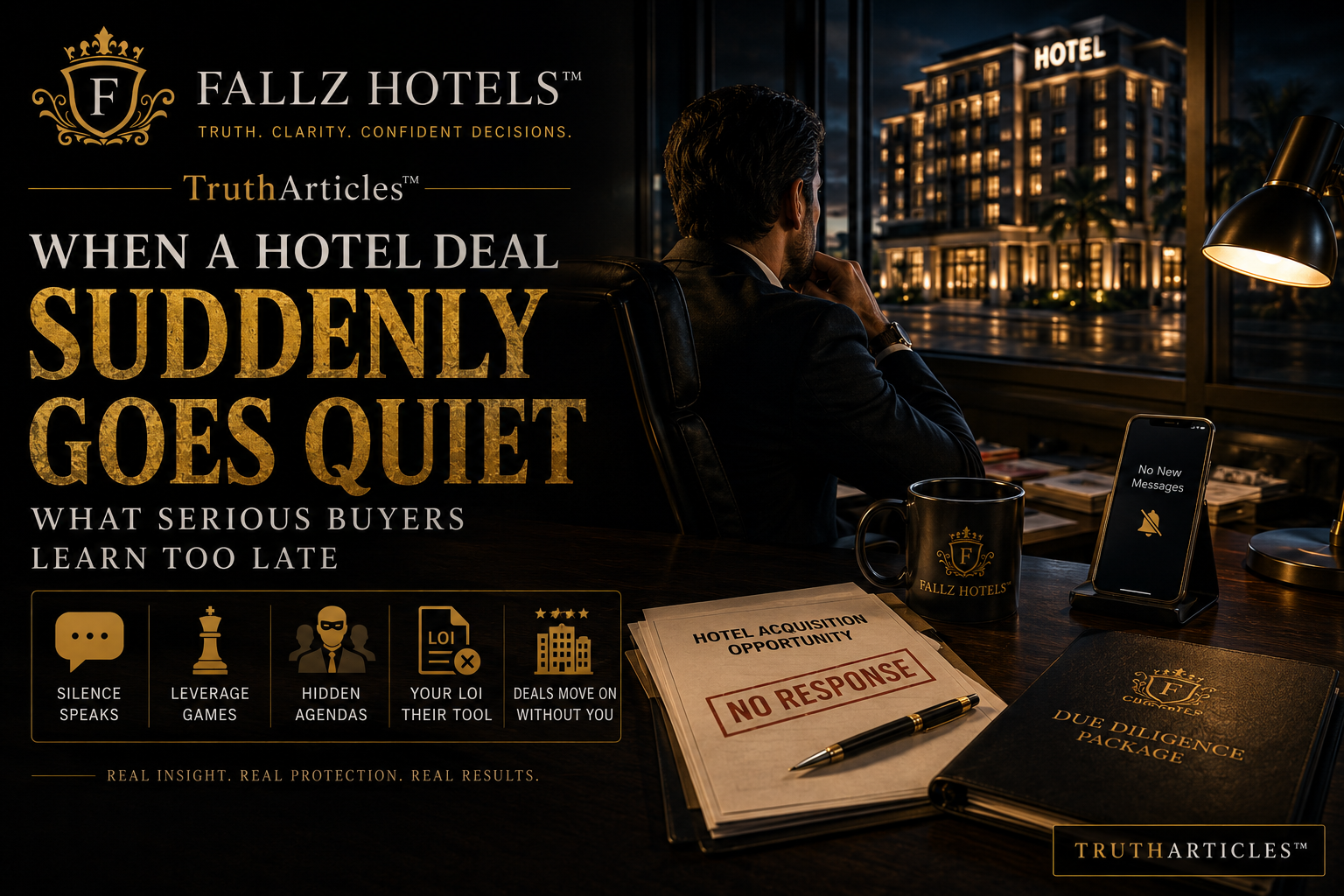
There is a particular kind of frustration that hotel buyers rarely talk about openly.
You find a property.
You review the package.
Ask thoughtful questions.
Spend time evaluating the opportunity.
Submit a serious Letter of Intent.
And then—
nothing.
Silence.
No real update.
No clear explanation.
No meaningful follow-up.
Eventually, you hear the deal moved elsewhere.
Or maybe—
you hear nothing at all.
And quietly, a difficult question starts forming:
“What exactly happened here?”
Because sometimes, hotel deals simply become competitive.
That is normal.
But sophisticated buyers eventually learn something else:
Sometimes—
they were participating in a process very differently than they thought.
Hotel transactions are complicated.
Multiple buyers.
Changing seller expectations.
Financing realities.
Shifting timelines.
That part is normal.
But buyers often underestimate how much negotiation psychology exists inside hotel transactions.
Momentum matters.
Perception matters.
Leverage matters.
And occasionally—
some buyers become part of a process that was never quite as transparent as they assumed.
Not necessarily malicious.
But not always clear either.
This one feels familiar to many buyers.
You submit serious terms.
Move quickly.
Show commitment.
Then…
very little happens.
No meaningful negotiation.
No real response.
No serious back-and-forth.
Weeks later—
silence.
Now, to be fair:
Sometimes sellers genuinely choose another path.
That happens.
But sophisticated buyers pay attention when serious offers seem to disappear without process.
Because occasionally, LOIs serve another purpose:
Creating optionality.
Helping gauge market appetite.
Supporting negotiation dynamics elsewhere.
Or simply helping sellers understand value.
Strong buyers understand something important:
Not every LOI enters a process equally.
You ask reasonable questions:
• Updated financials
• Brand obligations
• Property Improvement Plan details
• Staffing realities
• Seller disclosures
And somehow—
clarity never arrives.
Instead:
“We’re waiting on the seller.”
“We’ll circle back.”
“The information is coming.”
Sometimes delays are perfectly reasonable.
Hotel ownership is busy.
Documents take time.
But experienced buyers watch for patterns.
Because strong deals tend to move toward clarity.
Not away from it.
And when questions repeatedly stall—
sophisticated buyers pause.
At first—
everything moves quickly.
Calls.
Emails.
Energy.
The opportunity feels active.
Then suddenly:
Response times slow.
Updates become vague.
Momentum disappears.
And buyers quietly feel something difficult:
Confusion.
Because uncertainty often feels worse than rejection.
You start wondering:
“Did I miss something?”
“Did I say something wrong?”
“Was I ever actually in this?”
That feeling is more common than people admit.
This part catches many buyers off guard.
The same hotel quietly resurfaces.
Weeks later.
Months later.
Sometimes with slightly different pricing.
Sometimes with a different narrative.
And naturally—
buyers wonder:
“Wait… what happened?”
There are legitimate reasons this happens.
Deals fail.
Financing collapses.
Timelines change.
But sophisticated buyers quietly take note.
Because sometimes, market testing occurred more than actual selling.
And understanding that possibility protects future decision-making.
Experienced buyers often notice something subtle:
The deal lacked structure.
No clear process.
Unclear expectations.
Little transparency around who was involved.
No real timeline.
No sense of what happens next.
Strong buyers eventually learn:
Professional processes tend to feel more consistent.
Not perfect—
consistent.
And consistency matters.
Because trust grows when people understand how decisions are actually being made.
This part matters too.
Because many buyers quietly take these situations personally.
Especially after investing:
• Time
• Energy
• Advisors
• Emotion
• Hope
There is disappointment.
Sometimes embarrassment.
Sometimes frustration.
And sometimes—
a quiet loss of confidence.
But sophisticated buyers eventually realize something important:
One unclear process does not define your ability as a buyer.
It simply teaches you what stronger process looks like next time.
Strong buyers do not become cynical.
They become smarter.
They ask earlier questions:
• How will offers be evaluated?
• What is the seller timeline?
• Who reviews the LOI?
• What diligence materials exist?
• What process should buyers expect?
Not because they distrust everyone.
Because clarity protects everyone.
Buyer:
“I really thought we were in this.”
Advisor:
“Maybe you were.”
(Pause)
Advisor:
“But sometimes the better question is…”
“Did everyone else think you were too?”
That question—
quietly—
changes how experienced buyers approach future deals.
Not every quiet deal means something improper happened.
Sometimes—
another buyer simply wins.
That is business.
But sophisticated buyers understand something many people learn too late:
Clarity matters.
Process matters.
Transparency matters.
Because the strongest hotel deals rarely feel chaotic.
They tend to feel understood.
And buyers who learn to recognize the difference early…
usually protect both their time and their leverage far better later.

Many hotel owners begin thinking about the next chapter years before they ever make a decision.
Sometimes the first step is simply understanding what options may exist — quietly and without pressure.
Private hotel conversations.
Before anything becomes public.
Oakville, Ontario, Canada
Private conversations. No public listings.
Your information is handled with care — always.