For decades, hotels secured some of the best real estate in growing cities. Near highways. Near downtowns. Near business districts and transit. But increasingly, as urban priorities evolve, some hotel owners are beginning to ask a difficult question: What happens when the city around your hotel starts changing faster than your asset can adapt?
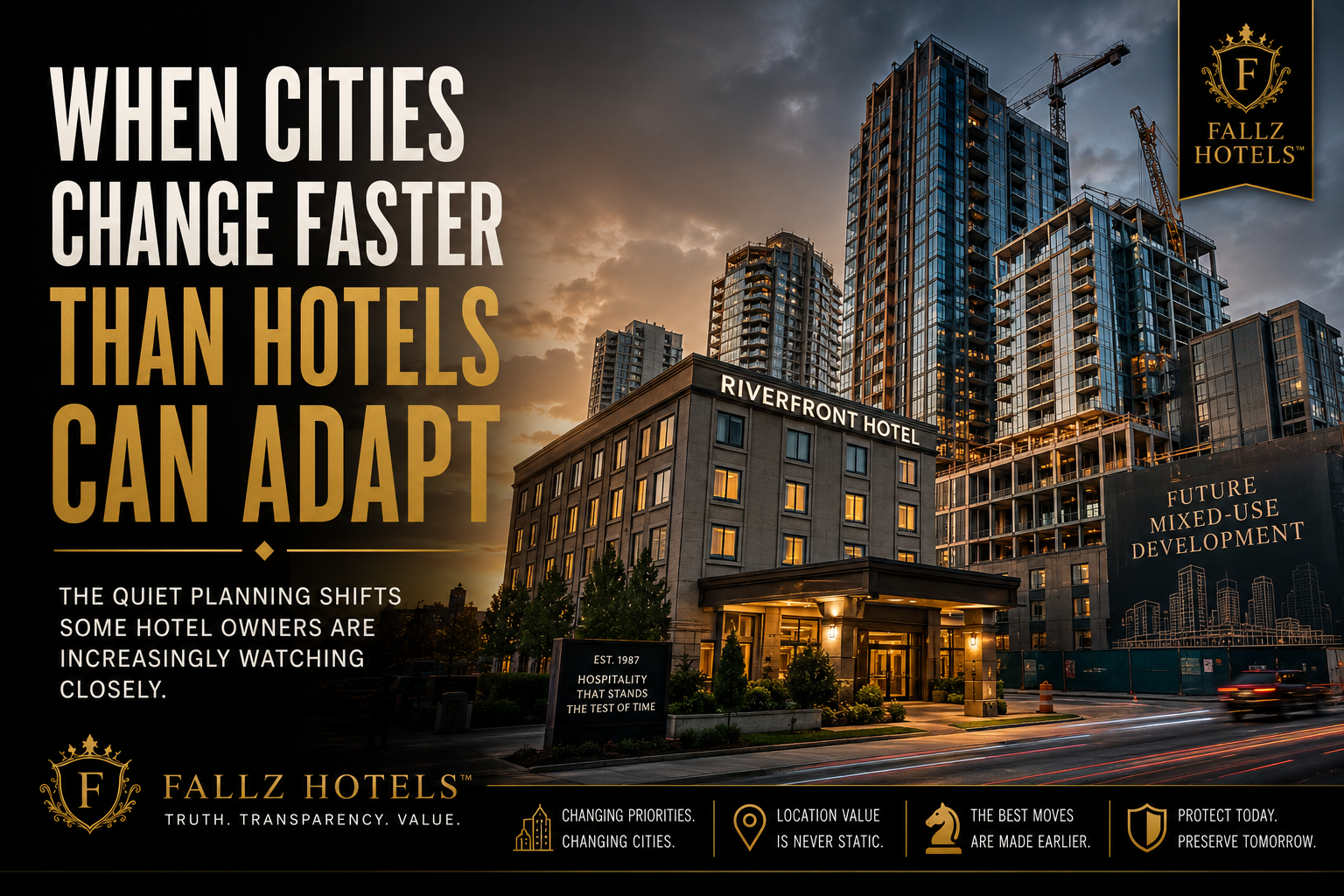
For decades—
great hotel locations followed familiar patterns.
Near highways.
Near downtowns.
Near airports.
Near corporate demand.
Near convention traffic.
Near visibility.
Location shaped value.
And often—
location shaped everything.
But increasingly—
some hotel owners are beginning to notice something subtle:
Quietly.
Sometimes quickly.
And not always in ways hospitality benefits from.
Because while hotels are long-term assets—
cities evolve much faster.
And increasingly—
some owners are beginning to ask:
That question deserves attention.
Urban priorities evolve.
Always have.
But in many markets—
the pace feels different.
Population growth.
Housing shortages.
Transit intensification.
Mixed-use development.
Density planning.
Environmental priorities.
Walkability goals.
Commercial redevelopment.
Municipalities increasingly face pressure to maximize land use.
And sometimes—
hospitality assets find themselves competing with those priorities.
Not intentionally.
Structurally.
That distinction matters.
Hotels often occupy attractive real estate.
High visibility.
Strong access.
Large parcels.
Established infrastructure.
Transit proximity.
Commercial corridors.
The same features that made hotels valuable decades ago—
sometimes make them attractive for other forms of development today.
Residential intensification.
Mixed-use projects.
Office repositioning.
Community redevelopment plans.
In growing markets—
land economics begin changing.
Quietly.
And increasingly—
some owners are beginning to ask:
That is a strategic question.
Not an emotional one.
This part matters.
Because planning changes rarely happen overnight.
Usually—
they arrive gradually.
Planning reviews.
Official plan updates.
Transit expansion.
Neighbourhood intensification.
Land-use consultations.
Zoning amendments.
Long before anything physically changes—
the planning direction often changes first.
And sophisticated real estate owners increasingly monitor those signals carefully.
Because eventually—
small planning shifts can influence:
Traffic patterns.
Visibility.
Access.
Neighbourhood identity.
Land value.
Competitive dynamics.
And yes—
future hotel economics.
Another overlooked reality?
How guests move matters.
Transit routes shift.
Road access changes.
Traffic patterns evolve.
Commercial activity relocates.
Business hubs migrate.
Neighbourhood energy changes.
Sometimes—
these changes help hotels enormously.
Sometimes—
they quietly weaken demand.
A location that felt perfectly positioned ten years ago—
may feel very different ten years later.
That reality deserves planning.
Experienced hotel investors understand something important:
They exist inside ecosystems.
Demand ecosystems.
Transportation ecosystems.
Economic ecosystems.
Urban ecosystems.
And when those ecosystems evolve—
asset performance sometimes changes with them.
Not because the hotel changed.
Because the surrounding market changed.
That distinction matters.
Especially over long hold periods.
Strong operators increasingly monitor:
• municipal planning agendas
• redevelopment proposals
• zoning consultations
• transit expansion plans
• mixed-use intensification
• neighbourhood repositioning
• commercial migration patterns
• infrastructure investment
Not because change is bad.
Because surprise is expensive.
And sophisticated owners increasingly understand:
That matters.
A lot.
Increasingly—
thoughtful operators ask:
Those are smart questions.
Especially in changing markets.
Owner:
“The hotel still performs.”
(Pause)
Advisor:
“It does.”
(Long pause)
Advisor:
“…but the question is what this area looks like five years from now.”
That conversation—
quietly—
changes investment decisions.
Cities evolve.
Neighbourhoods change.
Demand shifts.
Infrastructure moves.
And hospitality assets must adapt with them.
Because eventually—
experienced hotel owners understand something important:

Many hotel owners begin thinking about the next chapter years before they ever make a decision.
Sometimes the first step is simply understanding what options may exist — quietly and without pressure.
Private hotel conversations.
Before anything becomes public.
Oakville, Ontario, Canada
Private conversations. No public listings.
Your information is handled with care — always.